Key Takeaways
-
Applying some of these charity direct mail creative tips will make your direct mail work harder.
-
Remember to make the supporter the hero - not the charity - talk in 'you and yours' rather than 'us and ours'.
-
Talk about what the brain can easily accommodate - understanding the plight of one person is easier to imagine than the plight of 10,000.
-
Make the fundraising mix connected - multiple touchpoints contributed to each act of giving.
-
Partnering with an experienced provider like Woods Valldata allows charities to focus on strategy, storytelling and donor relationships.
Make Your Direct Mail More Responsive With These Charity Direct Mail Creative Tips
Let’s be honest: direct mail is under pressure. Production costs are up. Postage costs are up. And for many charities, every campaign now has to work harder to prove its worth. But that does not mean direct mail has stopped working. In fact, it still earns attention, builds trust and delivers strong results in a way few other channels can. Recent Woods Valldata research shows that DM was the most used and most valued channel in 2025.
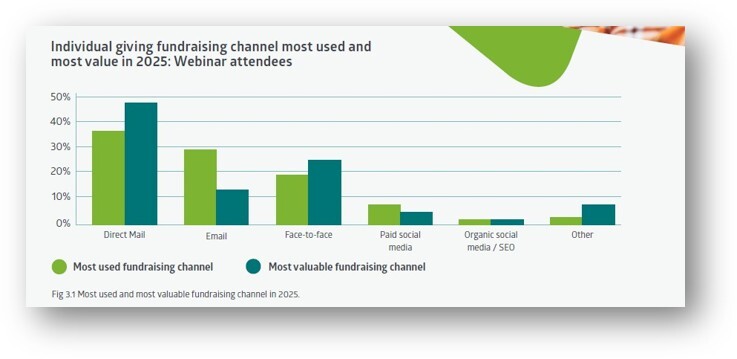
The question is not whether direct mail still works. It is how to make charity direct mail more responsive when budgets are tight. This blog looks at some charity direct mail creative tips shared during the Making Direct Mail Work Harder webinar hosted by Woods Valldata - want to know more? Watch on demand now.
At Woods Valldata, we work with charities every day that are seeking to make their individual giving direct mail fundraising work harder. And what we see is encouraging. The strongest campaigns are not always the biggest or most expensive. They are the ones with clear, human creative. Simple changes can make the ask more responsive. And then they lean in to joined-up supporter journeys and a really good experience once the donation comes in in your charity response handling. Because a direct mail pack is only part of the story. What happens next matters just as much. If a gift is processed quickly, data is captured accurately and the supporter is thanked in a warm and timely way, you are not just handling a response: you are building trust, loyalty and future value.
So, if you are looking at your next appeal and wondering how to make your charity direct mail more responsive, here are a few creative ideas worth testing.
1. Start with one person, one problem and one action
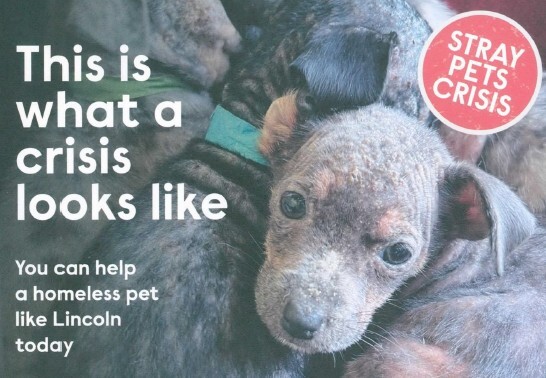
One of the most helpful reminders from Stu Radcox in our webinar was that supporters do not need the whole scale of the issue to feel moved. In fact, telling them they can help 100,000 people can actually stop them giving as it is too overwhelming. They need a clear, donor-sized problem they can help solve such as helping just one person who represents the bigger issue. That fits closely with the decision science ideas shared by Marina Jones and Meredith Niles at their session "8 3/4 small decision science shifts that will have a big impact on your fundraising" during the CIOF Convention 2026, where they highlighted just how powerful one human story can be - the story of one child doubled gift size compared to sharing statistics alone. If someone can picture the beneficiary they are helping, they are much more likely to respond [image: Woodgreen stray pets crisis campaign 2026 focusing on the needs of one].
2. Write like a person, not a brochure
Stu also shared a brilliantly simple truth: too much fundraising copy still talks about “we”, “our” and “us”. The better approach is to make the supporter the hero. Use “you”. Show them the change they can make. Keep the language natural and conversational. If it sounds like something you would actually say to a supporter over a cup of tea, you are usually on the right track.
3. Lean into the physical nature of direct mail
John Eddolls from Marketreach spoke during the Woods Valldata Making Direct Mail Work Harder webinar. He reminded us that direct mail works differently because it is physical. People hold it, revisit it and often leave it somewhere visible for days. That gives you more chances to be noticed. So think carefully about your envelope, your format, your paper stock and your visual cues. Marina Jones and Meredith Niles also highlighted, during their session at the 2026 CIOF Convention, subtle nudges such as:
-
Social proof - making the donor feel like their behaviour is aligned to others' such as saying or visually indicating "most people give £30" (or what your average is)
-
Urgency - humans respond best when it is time critical. How can you encourage them to act now?
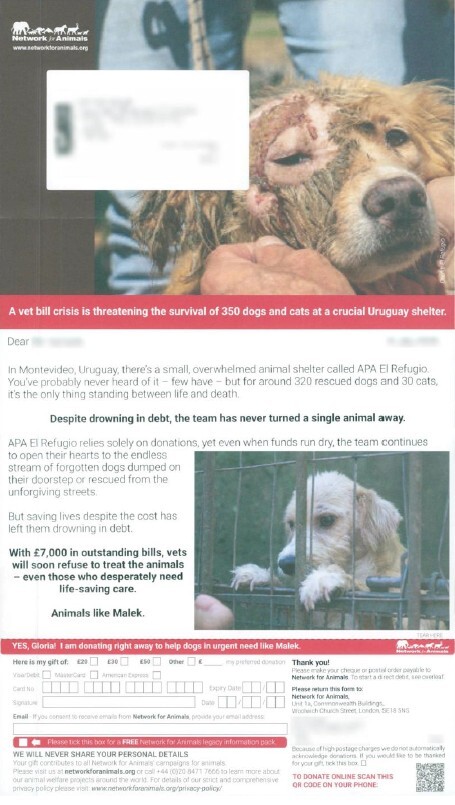
- The direction of a person’s gaze in an image - Marina and Meredith through testing noted that having the eye gaze or a pointing motion in an image directed towards the CTA actually increased responsiveness.
These little details can make your creative easier to take in and easier to act on.
[Image: Network for Animals 2025 Malek Appeal, with the image at the bottom of the piece looking at the CTA - intentional or not, this draws the eye to what they're asking the donor to do]
4. Make sure your direct mail works with your other channels
Some supporters will read your letter and send back a reply form. Others will read it, think about it, and then donate online later after seeing an email reminder, a social post or DRTV. That is why creative consistency matters. If the message, imagery and emotional hook carry through across channels, your direct mail is doing more work for you. It is helping open the door, while other channels make it easy to respond. John shared Marketreach and JICMAIL research around super touchpoints: channel combinations that together product disproportionately strong marketing outcomes. He explains that from this we can conclude:
- Door drops combined with TV form the strongest channel combination driving successful charity outcomes
- Personalised direct mail comes a close second
- And third is social media and door drops
5. Do not forget who is most likely to respond
Older supporters continue to be hugely important to many charities, both in generosity and responsiveness. Mark Phillips has made this point strongly in his writing, and it is an important one. If some of your best donors are older and more responsive to post, then speaking to them clearly and confidently through direct mail is not old-fashioned. It is smart fundraising.
6. Finish strong with the post-donation experience
This is where outsourced response handling can make a real difference. At Woods Valldata, we support charities with outsourced response handling for large campaigns and smaller programmes alike, so internal teams are not stretched when responses start arriving. We handle post opening, payment processing, secure banking, supporter services and highly personalised thanking through our SmartThank platform. We also give our charity partners access to online portals with up-to-date campaign information, so you can see what is happening, report internally and make onward decisions quickly. The result is a smoother supporter experience, less pressure on internal resource, higher retention and a stronger foundation for loyalty and lifetime value.
Test your approach
If you want to make charity direct mail more responsive, these creative tips can be big part of the answer. All charities and all donors are different, however, and one size does not fit all. Consider testing some of these charity direct mail creative tips in your next individual giving fundraising direct mail campaign and see if they make a difference for your charity income and engagement.
And remember: success also comes from everything that happens after the ask. Great campaigns make supporters feel something, make it easy to respond and then make people feel valued once they do. That is why outsourced response handling matters. If you would like to talk about outsourced response handling, supporter services, SmartThank or online portals that free up your team and improve supporter experience, contact Woods Valldata. We would love to help.
FAQs: how to make charity direct mail more responsive
How can charities make direct mail more responsive? The best place to start is with a clearer story, a stronger ask and a better supporter journey. Focus on one person and one problem, write in a warm and natural voice that makes the supporter the hero - not the charity, and make sure the response experience is quick and reassuring. If you want to make charity direct mail more responsive, creative and operations need to work together.
Does direct mail still work for charities? Yes. Direct mail still works well for many charities because it earns attention, builds trust and often performs strongly alongside email, social and DRTV. It is especially effective when the creative is focused and the follow-up is handled well.
Why does response handling matter for direct mail performance? Response handling matters because it shapes the supporter’s experience at a key moment. Fast processing, accurate data capture and prompt, personalised thanking all help supporters feel valued. That can improve loyalty, retention and future response.
Can outsourced response handling work for smaller individual giving programmes too? Yes. Outsourced response handling is not only for very large appeal volumes. It can also help smaller programmes by freeing up internal resource, improving turnaround times and giving supporters a better, more consistent experience - speak to Woods Valldata about their ResponseGo service specifically designed for charities with smaller response volumes.