
If you work in individual giving for a small charity, you probably know the feeling well: big ambitions, a brilliant cause, and a fundraising to-do list that grows faster than the hours available to tackle it. For many small charity teams, sometimes just one person, the challenge is not a shortage of ideas. It is knowing which charity fundraising ideas for small charities are practical, affordable and likely to build income over time.
That matters because the current giving environment is tough. CAF’s UK Giving Report 2026 estimates that the British public donated £14 billion in 2025, down from £15.4 billion in 2024, with around six million fewer donors than ten years ago. It also highlights affordability as a major barrier to giving. For small charities, this underlines the need for thoughtful, resilient individual giving strategies that make supporters feel connected, valued and confident that their gift matters.
Key Takeaways
-
Small charity fundraising works best when it is focused, realistic and rooted in supporter relationships.
-
Individual giving income can grow through a mix of welcome journeys, impact updates, project-based asks, social media engagement and regular giving products.
-
Supporters are more likely to stay connected when giving feels personal, purposeful and part of who they are.
-
Weekly lottery can work as prize-led regular giving: a lower-cost, more playful alternative to a cause-led committed gift.
-
Weekly lottery can help charities build unrestricted regular giving income that is more predictable and forecastable.
-
For small teams, Affinity Lottery from Woods Valldata can remove much of the operational and administrative burden once the charity has secured its local authority licence.
Start with belonging, not just asking
One of the most powerful charity fundraising ideas for small charities is also one of the simplest: help supporters feel they belong. Research on social identification and charitable giving, including a 2025 systematic review and meta-analysis by Cassandra M. Chapman, Jessica L. Spence, Matthew J. Hornsey and Lucas Dixon, found that identification with donors, beneficiaries and fundraisers is positively associated with giving. In practical terms, people often give because the cause reflects something important about who they are, what they value, or the community they want to be part of.
For small charities, that is good news. You may not have the biggest media budget or the largest database, but you can often offer something larger organisations sometimes find harder to create: closeness. A supporter can feel genuinely seen, thanked and involved. Your communications can sound human. Your impact can feel local, individually relevant, tangible and immediate.
Build a welcome journey that makes donors feel special
A new donor’s first few weeks are precious. Rather than treating a donation as the end of a campaign, see it as the start of a relationship. A simple welcome journey can help supporters understand the difference they are making and what they can expect from you next. This does not need to be complicated. A warm thank-you email, a short impact story, a personal note from someone close to the cause, and a gentle invitation to stay involved can make a meaningful difference.
Think about the emotional job your welcome journey needs to do. It should reassure supporters that their gift has landed safely, show them they made a good decision, and invite them into being part of your charity’s mission. For small charity fundraising, this is one of the best foundations for long-term individual giving income because it supports loyalty before you ask again.
Share regular impact pieces
Supporters do not always need another ask. Sometimes they need a reminder that their support is working. Regular impact pieces, whether by email, post, social media or newsletter, help people connect their giving with real outcomes. Keep them short, clear and specific. One story, one need, one result often works harder than a long list of achievements.
For example, if you raise money for a specific project, tell supporters what stage it has reached. If you still need £3,000 to fund a piece of equipment, say so. If the target has been reached, close the loop and show what happened next. This kind of honest, ongoing communication helps supporters feel part of progress rather than simply being asked to respond to a series of disconnected campaigns.

Use social media to spark interest, then follow up
Social media is brilliant for visibility, storytelling and bringing personality into your fundraising. But for many small charities, the real value comes when social activity is connected to other channels. A moving reel, a volunteer story or a project update can spark interest, but email, direct mail, phone or a personal follow-up may be what turns interest into giving.
That means every social post should have a next step. Can people sign up for updates? Join a webinar? Download a guide? Enter a lottery? Give to a specific project? The most effective charity fundraising ideas for small charities are rarely channel-only ideas. They work because each touchpoint has a job to do.
Lottery messaging is also a useful place to test. Some supporters will respond most strongly to the difference their play makes; others will be motivated by the chance to win. Testing cause-led and prize-led creative across organic social, email and paid activity can help you understand what works for your audience before you invest more heavily.
Think about regular giving in more than one way
Regular giving is one of the most valuable income generation ideas for small charities because it gives charities income they can plan around. But not every supporter is motivated by the same proposition. Some will respond to a direct debit ask focused on monthly impact. Others may be more drawn to a prize-led route, where they can support the cause and have the chance to win. That makes weekly lottery useful to think of as a prize-led committed gift: an alternative to cause-led regular giving rather than a completely separate product.
This is where weekly lottery can play a useful role in the individual giving mix. In the Woods Valldata prize-led fundraising webinar, speakers highlighted that weekly lottery can attract a slightly different supporter profile, offer a more fun way to engage, and provide an alternative regular giving route. With many players taking one or two chances a week, the monthly commitment can often sit around £4-£10, making it a lower entry point than some traditional committed giving asks. The benchmarking shared in the session also pointed to weekly lottery remaining broadly stable, even in a challenging fundraising climate, with many charities balancing acquisition, retention and stewardship to grow longer-term value.
Weekly lottery: practical, but only if it is manageable
When it comes to charity fundraising ideas for small charities, weekly lottery is one of the fore-runners. But for small charities, the question is rarely “could a weekly lottery raise money?” It is usually “do we have the time, budget and knowledge to run one properly?” In a poll conducted during the recent Woods Valldata Introduction to Weekly Lottery webinar, the biggest barriers were lack of experience or understanding in the team, internal resource, time to set up and manage, budget, and trustee or leadership buy-in. Lottery fundraising also brings important responsibilities, from licensing and compliance to payment processing, draw management, player administration, prize fulfilment and reporting. For a small team, that can feel like a lot.
Affinity Lottery from Woods Valldata has been designed with that reality in mind. It acts as a test-the-water, entry-level lottery with a lower financial buy-in and less risk. Once your charity has secured its small society lottery licence from the local authority, the operational and administrative side is taken care of. Supporters can sign up through a templated, branded lottery site, payments and direct debits are managed, draws are handled, and prizes are paid out. Woods Valldata also covers the prize fund, meaning your team can focus its energy where it matters most: attracting players, telling the story of your cause and building relationships.
We know that that still requires effort. A lottery will not grow itself. You will need to promote it through your warm supporter base, website, email, social media, events and community networks. And any organic opportunities such as newsletter mentions, email footers, leaflets, posters, reception areas, charity shops, community spaces, member-get-member activity and friends-and-family sharing. But the great thing about Affinity is that you do not need to build the entire infrastructure from scratch – you can start with just one player. For many small charities, that makes weekly lottery a more realistic income generation idea.

Keep players playing with stewardship
Woods Valldata’s research has found that on average charities spend 47% of their IG budget on retention activities. Welcome packs, first draw reminders, winner communications, impact updates, bonus draws, upgrade campaigns and anniversary moments can all help supporters feel connected. After-all – it’s six times more expensive to attract a new supporter than keep an existing one. The point is not to over-communicate, but to make the lottery feel real: real winners, real impact, real reasons to keep playing.
For small charities, this can be reassuring. You do not need a huge stewardship programme to begin. You need a few well-timed, thoughtful touchpoints that remind players why they joined, what they could win, and how their regular support helps your charity plan ahead.
It can also help to treat lottery as a long-term regular giving investment, not a short campaign that should deliver instant return. A simple forecasting model can support internal conversations by showing when initial investment may pay back and how lottery income could grow over time. That can be particularly useful when trustees or senior leaders want to understand the business case.
A balanced fundraising mix for small charities
No single idea will solve every income challenge. The best charity fundraising ideas for small charities usually work together. A welcome journey builds confidence. Impact updates deepen trust. Project-based appeals give people a clear reason to act. Social media creates interest and reach. Regular giving products, including weekly lottery, help turn support into more predictable income.
Weekly lottery is not right for every charity, but it is a viable option for small charities that want to grow unrestricted regular giving income without taking on a heavy operational burden. With Affinity Lottery from Woods Valldata, getting started can be simpler, lower risk and more manageable, giving your team more time to focus on the supporter experience.
And in a fundraising landscape where donors are making more careful choices, that supporter experience matters. People give when they feel connected, trusted, inspired and part of something. If your charity can make supporters feel they belong, then every fundraising idea, lottery included, has a much stronger chance of growing into lasting individual giving income.
Speak to a prize-led fundraising expert
Wherever you are in your journey, speaking to a prize-led fundraising expert can help you decide you next best step.
Woods Valldata were one of the first External Lottery Managers in the sector, are one of the most established lottery service providers, and have a wealth of knowledge and experience in all things lottery. Why not reach out to one of our friendly team to find out which one of the many options available is right for your charity – of find out more about what we have to offer on our website.
Frequently Asked Questions: Charity fundraising ideas for small charities
What are the best charity fundraising ideas for small charities?
The best ideas are practical, repeatable and relationship-led. Strong options include welcome journeys, regular impact updates, project-based appeals, social media campaigns with clear follow-up, community fundraising, regular giving activity and weekly lottery.
How can a small charity grow individual giving income?
Start by improving the supporter journey. Thank donors well, show impact, ask clearly, and offer ways to give regularly. Over time, combine one-off appeals with regular giving products that create more predictable income.
Is weekly lottery a good fundraising idea for small charities?
Weekly lottery can be a good option because it offers supporters a low-cost, fun way to give regularly while helping charities build unrestricted, predictable income. The key is making sure the operational, compliance and stewardship requirements are manageable.
What does a small charity need before starting a weekly lottery?
A small charity will need the right licence, usually a small society lottery licence from the local authority connected to its registered address, plus a clear plan for promoting the lottery and stewarding players. Requirements can change, so charities should always check current rules with their local authority. A managed product such as Affinity Lottery can help with the administration once licensing is in place, and working with an expert like Woods Valldata can provide you with a lot of the support you need to get going.
How do you keep lottery players engaged?
Use a simple stewardship journey. Welcome players warmly, remind them when they are first entered into the draw, share winner stories, show the impact of their support, and consider timely bonus or anniversary communications.
How can small charities fundraise when budgets are tight?
Focus on low-cost activities that use your existing strengths: warm email, supporter stories, social media, community advocates, local partnerships and clear project asks. Choose fundraising products that match your team’s capacity as well as your income goals.
How can charities respond to trustee concerns about lottery fundraising?
It helps to frame weekly lottery as a regulated, responsible, prize-led regular giving product rather than an instant-win gambling mechanic. Demonstrating that the lottery will have a clear safer gambling policy, appropriate play limits, compliance processes and a realistic forecasting model can all help reassure trustees and leaders that the product is being managed responsibly.
About the Author:
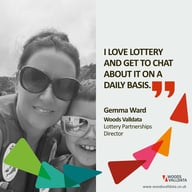 Gemma Ward is our Lottery Partnership Director here at Woods Valldata. She has been working alongside charities for over 15 years to develop and grow their raffle and lottery programmes. Dedicated to collaborating with UK charities to establish and expand their weekly lottery programmes, she loves chatting to people and working with them from very first contact all the way through to welcoming their first players and developing their programme with them. Affinity Lottery is especially rewarding as Gemma is able to work with smaller charities to help them access and thrive with this fun and effective regular giving fundraising income stream.